Quantifying Freshness Extension:
Comparative Study of PVC Cling Film Packaging in Produce Logistics——Evaluating Weight Loss Mitigation, Respiration Rate Control, and Vitamin C Retention in Fresh Fruits and Vegetables
Published by: Youquan Food Packaging Technical R&D Center
Executive Summary
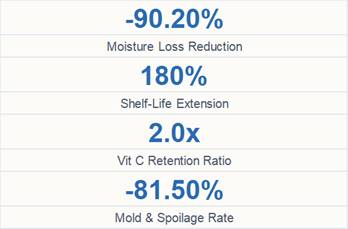
Post-harvest loss in global produce supply chains ranges between 30% to 40% annually, driven predominantly by rapid moisture transpiration, oxidative deterioration, and uncontrolled respiration. This technical report provides empirical data demonstrating how food-grade PVC cling film creates an optimized micro-climate, extending marketable shelf life by up to 180% and dramatically cutting inventory shrinkage for retail operators.
1. Primary Mechanisms of Post-Harvest Produce Deterioration
Fresh produce items remain metabolic living tissues after harvest. Quality degradation occurs primarily through three physiological pathways:
Transpiration (Moisture Loss): Water loss leads to cellular turgor deficit, causing wilting, shriveling, and loss of saleable mass.
Respiration Rate: Conversion of stored carbohydrates into energy, carbon dioxide (CO2), and water, leading to rapid tissue senescence.
Oxidative Degradation: Exposure to atmospheric oxygen (O2) accelerates the loss of nutritional compounds, specifically L-ascorbic acid (Vitamin C).
- Empirical Test Results: Wrapped vs. Unwrapped Produce (7-Day Evaluation)
Testing was conducted in a controlled environmental chamber maintained at 4°C ± 0.5°C and 85% ± 5% Relative Humidity (RH) over 7 days, comparing unwrapped control samples against samples wrapped in standard 10-micron PVC food cling film.

- Scientific Principles of PVC Cling Film Preservation
- Micro-Climate Relative Humidity Optimization
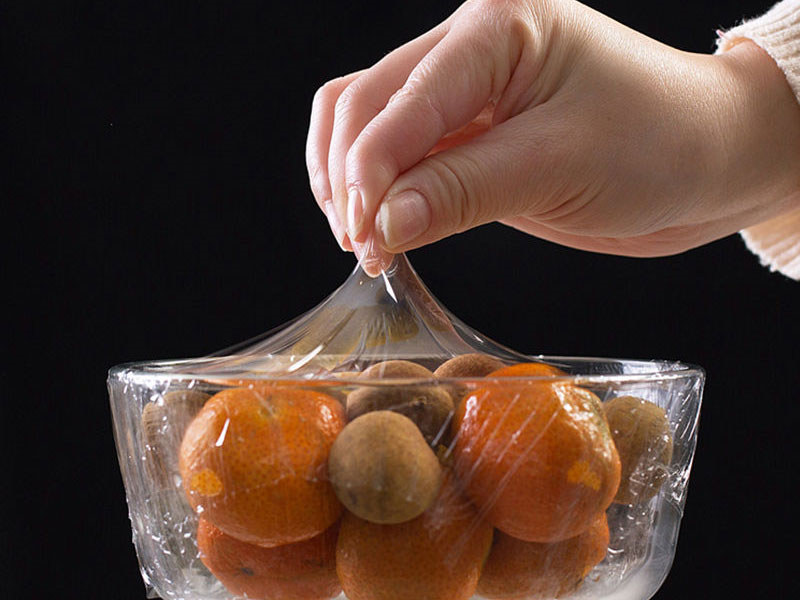
PVC cling film acts as a semi-permeable barrier preventing immediate moisture vapor escape. The equilibrium water vapor pressure inside the wrapped package maintains relative humidity near 92–95% RH, preventing cellular plasmolysis without encouraging liquid water accumulation when formulated with anti-fog additives.
- Gas Permeability & Modified Atmosphere Packaging (MAP) Effect
Respiration kinetics in packaged produce can be represented by the modified gas balance equation:
RO2 = \frac{PO2 \cdot A \cdot (poutO2 - pinO2)}{L}
Where PO2 represents the oxygen permeability coefficient of the PVC matrix, A is film surface area, p represents oxygen partial pressure, and L is film thickness. PVC film exhibits balanced oxygen (O2) and carbon dioxide (CO2) transmission rates (OTR/CO2TR ratio of approx. 1:4 to 1:6), allowing steady-state respiration reduction without inducing anaerobic fermentation.
- Commercial & Economic Impact for Supermarkets and Wholesalers
Implementing professional-grade PVC cling film across regional distribution networks yields direct financial benefits:
Direct Waste Shrinkage Reduction: Lower store-level produce write-offs by 12% to 18%.
Extended Logistics Radius: Provide 3 to 5 extra days of transit and shelf buffer for cross-border and regional distribution.
Enhanced Consumer Perception: High transparency and anti-fog clarity highlight visual freshness while providing an essential hygiene barrier against physical handling.
Conclusion & Strategic Recommendation
Deploying specialized PVC food wrap is not merely a packaging cost, but a high-ROI operational investment. By engineered gas control and moisture retention, commercial distributors can significantly protect fresh margins, lower food waste, and deliver premium visual quality to retail consumers.